Affordable Housing Take Center Stage at the ICAA’s Ray Gindroz Symposium
Torti Gallas + Partners accepted the 2026 Gindroz Award for Excellence in Affordable Housing in Washington, where speakers argued that good housing starts with the people who live in it.
By Hadley Keller
“Housing is about more than design,” Eric Osth told the audience as he opened the Institute of Classical Architecture & Art’s 2026 Gindroz Symposium on Affordable Housing on October 17. It is about people, he said, and about the human spirit. As any true classicist knows, this is the core ethos of true classicism—a human-centric approach to design.
That idea ran through the afternoon program, held at The Catholic University of America, where leading practitioners, advocates, and legislators in the affordable housing arena gathered at the to discuss the recent history, current state, and future of the topic, one whose relevance continues to grow amidst current housing shortages and affordability crises.
The day was also a chance to honor Torti Gallas + Partners as this year’s recipient of the ICAA’s Gindroz Award. The award honors Ray Gindroz, co-founder of Urban Design Associates, whose five-decade career centered on turning isolated public housing projects into genuine urban neighborhoods. It recognizes affordable housing rooted in classical, traditional and vernacular design. Past recipients include the Housing Authority of the City of Santa Barbara, Union Studio, Artspace and Nansledan, the Duchy of Cornwall’s new town in England, which was celebrated at last year’s inaugural symposium in New York.
Few firms have a longer record in the field than this year’s honoree. Founded in 1953, Torti Gallas has worked on affordable housing for more than half a century, earning its first AIA award in 1968 for Sibley Plaza in Washington.
The symposium began with a panel discussion featuring current leadership at Torti Gallas, offering insight into the firm’s unique approach to holistic, human-centric design that boasts both budget consciousness and design integrity.
John Torti framed the firm’s approach around four words: money, choice, community and wholeness. A project has to work financially, but residents also need real options, a neighborhood to belong to, and places that feel complete rather than institutional.
Lawrence “Murphy” Antoine, the firm’s president and board chair, urged the audience to move beyond thinking of housing as a commodity. The goal, he said, is housing that is “affordable to occupy,” not merely affordable to build. He described a design language of “hero buildings” and “soldier buildings”: the landmarks that anchor a neighborhood and the everyday residential fabric that surrounds them. Both, Antoine argued, deserve equal dignity.
He also explained why the firm organizes itself around market “segments,” such as senior or affordable family housing, rather than conventional design studios. Specializing lets architects truly get to know the clients and residents in each world, he said, and builds stronger, longer relationships.
Later in the day, the audience heard from experts Elinor Bacon and Megan O’Hara on historic, current, and future federal housing programs, including HOPE IV—which Bacon administered under president Clinton’s HUD—and Choice Neighborhoods, then heard a case study about the effectiveness of Single Stair design from Torti Gallas’s Julia Renaghan.
Unsurprisingly, a recurring theme of the day was the necessary collaboration between developers, community, and local and state or federal governments, a balance that can be difficult to strike—but a home run when done right. Antoine pointed to Beecher Terrace in Louisville, Kentucky, where a barracks-style public housing complex has been rebuilt as a mixed-income neighborhood with federal Choice Neighborhoods funding.
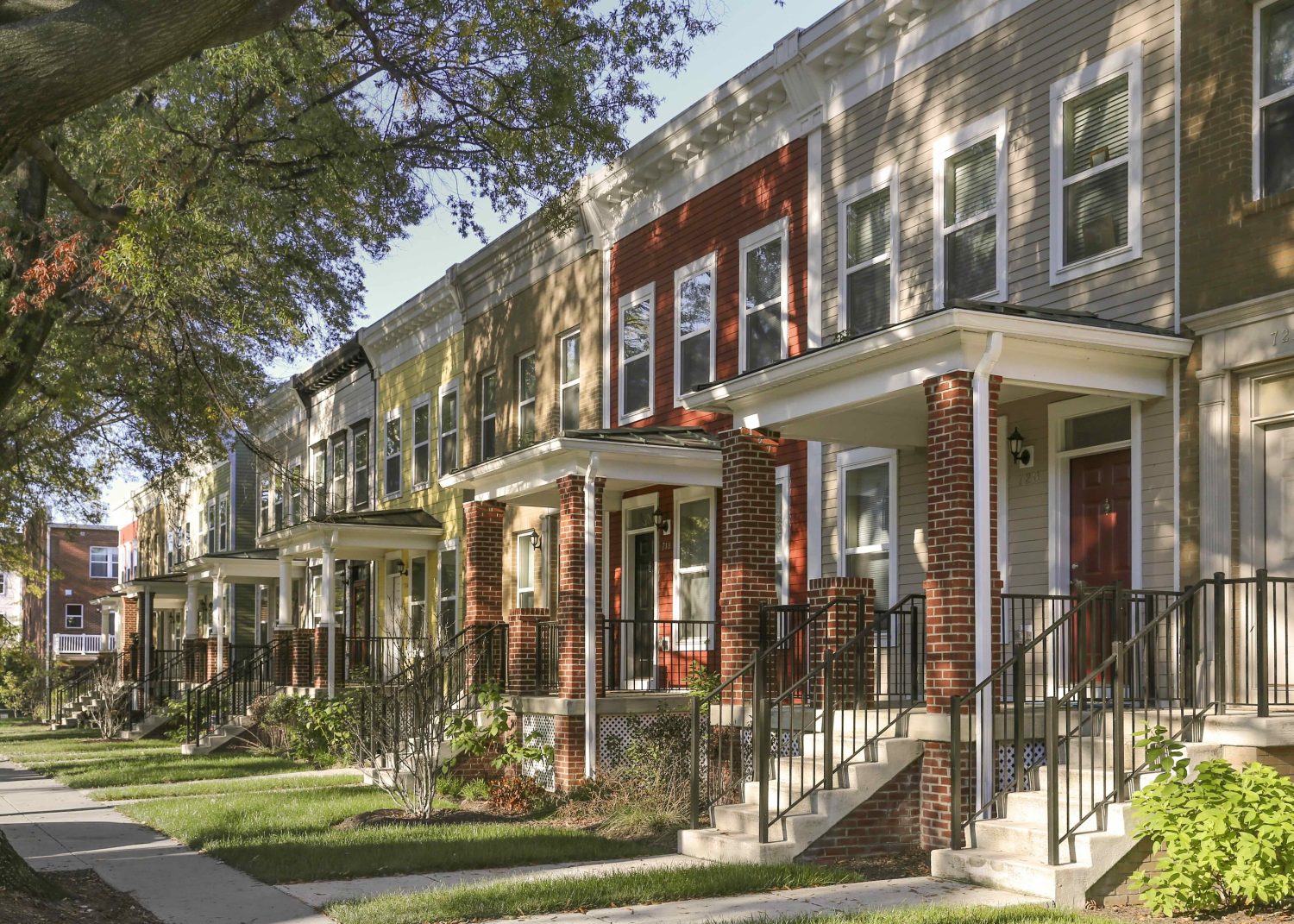
But at the end of the day, the connecting thread for each session was the importance of reflecting the residents in their own housing. As O’Hara relayed, “We always ask the residents about their aspirational neighborhoods, what we want to see. And we always hear, ‘I want it to look like a home.’”